

Improving Learning Outcomes
Actively engaging learners in the learning process is essential for their success.
In this section, we explore instructional strategies designed to foster a dynamic learning environment. Additionally, we provide practical strategies for crafting effective slide decks.
Creating a Welcoming Learning Environment
At the core of effective teaching is the profound understanding that learners thrive in an environment where acceptance, encouragement, and engagement are not just ideals but fundamental pillars.
When learners feel accepted, they are more likely to embrace challenges and approach learning with confidence. Encouragement acts as the catalyst, nurturing their self-belief and motivating them to explore beyond their boundaries. In such an atmosphere, engagement becomes natural, as students actively participate in discussions, ask questions, and delve deep into the subject matter.
In this section, we detail strategies for establishing a welcoming learning environment.
-
It is essential for instructors to assure learners that they are in a space where their mistakes do not define them. In fact, mistakes can be a starting point for new growth . Successful instructors encourage learners to look at current areas where they can improve or reflect on past missteps that have taught them a new way to do things (Sanders, 2021).
-
Like those who are attentive to the tone of the learning environment , instructors who set expectations allow learners to feel more comfortable in the learning space. By outlining what learners can expect, instructors set them up for success. Instructors who provide agendas and learning objectives help learners understand the direction their learning journey is taking (Couturier, 2021).
-
An easy way for instructors to make adult learners feel welcome is to show them their gratitude. Adult learners can rarely make learning their first priority and are often asked to put the needs of others’ ahead of their own. .An instructor who offers a simple “thank you” to learners who make the time for learning goes a long way in helping learners feel appreciated and like they belong (Rawson, 2021).
Expressing gratitude may seem like a small or obvious step, but letting learners know you are thankful for their time is essential. It is important that instructors do not overlook this simple task when working with busy adult learners .
-
While instruction can come in many forms, perhaps the most common approach is lecture. It is essential that instructors understand that lectures are not speeches (Ludwig, 2016). While certain state or regulatory requirements may make lecture style necessary , it is important to note that it need not be boring. Instructors should let learners feel involved in the topic by using hypothetical situations, encouraging learners to contemplate their own job roles and even consider how they can do those jobs more effectively or efficiently.
-
As an instructor, it is easy to appear as a one-dimensional character. Some learners may even see an instructor as the living embodiment of a textbook. The easiest solution to this is for an instructor to make themselves relatable. Instructors who share stories of their own experiences or bring up compelling examples will connect with their learners (Landrum, 2016). Instructors who explain why and how their instruction should matter to their learners are more likely to keep the attention of those learning their content.

Promoting Critical Engagement

At The Institutes, we recognize that facts are free. Anyone with an internet connection can Google a concept or keyword, and if they apply themselves, remember and likely understand the basics associated with that query.
As Benjamin Bloom suggested, however, teaching is more than encouraging learners to memorize and understand basic concepts in a sterile, decontextualized vacuum. Learners truly learn when given the opportunity to engage in more cognitively complex activities: applying, analyzing, evaluating, and even producing new or original work as practitioners in their field. It’s an instructor’s responsibility to create these higher-order opportunities for their learners.
Below is Bloom’s Taxonomy, a hierarchical framework that classifies educational objectives and skills into six levels of cognitive complexity, starting with “remember” and ascending to “create.” We’ve framed each level with examples from the risk management and insurance industry, our “application” of Bloom’s. We encourage instructors to “analyze,” “evaluate,” and “create” instruction that encourages learners to advance through this hierarchy as well.

Using Technology to Enhance Learning
When preparing for and presenting to a digital audience, an RMI professional who effectively leverages technology can significantly enhance the learning experience for adult learners (Abbajay, 2020). With a focus on some fundamental components, you can create a comprehensive and learner-centric approach, fostering an environment that maximizes the effectiveness of technology in adult education.
In this section, we detail ways in which instructors can best leverage technology to enhance learning.
Use Technology to Prepare Your Instructional Material
-
Pros
Efficiency: AI can analyze vast amounts of data quickly, streamlining the process of content creation and helping presenters generate relevant and targeted material efficiently.
Personalization: AI algorithms can customize content based on the preferences and learning styles of individual participants, enhancing engagement and understanding.
Data-Driven Insights: AI can provide insights into learner behavior, allowing for continuous improvement of content and delivery.
Cons
Lack of Creativity: AI may struggle with the creative aspect of content creation, potentially leading to a lack of originality or a standardized tone in the produced material. This is because AI may find it difficult to replicate the nuanced and imaginative aspects of human creativity. Additionally, AI often relies on patterns and existing data for content creation, which may limit its ability to generate truly novel and unique ideas. Human creativity often involves intuition, emotions, and contextual understanding, aspects AI may find challenging to fully emulate.
Bias: Depending on the data used to train the AI, there is a risk of bias in generated content, which can compromise your broad audience’s ability to engage with the materials.
Complexity: Implementing AI systems may require technical expertise, and there could be a learning curve for presenters to effectively utilize AI-generated content (Hetler, 2020).
-
Pros
Real-Time Collaboration: Google Drive allows multiple users to collaborate simultaneously on documents, spreadsheets, and presentations in real-time, fostering teamwork and productivity.
Accessibility: Participants can access and contribute to shared documents from anywhere with an internet connection, promoting flexibility and remote collaboration.
Version Control: The platform automatically saves versions, making it easy to track changes and revert to previous states if needed.
Cons
Security Concerns: While Google Drive is secure, sensitive information may be at risk if proper access controls and sharing settings are not properly configured.
Dependence on Internet: A stable internet connection is crucial for seamless collaboration. Technical issues or connectivity problems may disrupt the collaborative process.
Learning Curve: Some participants may be less familiar with the platform, requiring training and support to fully leverage its collaborative features.
-
Videos: Incorporate short, relevant videos to illustrate key points, providing a dynamic and visual component to the learning experience.
Polls and Pulse Checks: Use polls to gather real-time feedback, check understanding, and keep participants engaged. Pulse checks assess the audience's mood or level of interest.
Q&A Sessions: Facilitate interactive Q&A sessions to encourage participant engagement and address specific queries. Technology tools can help manage and prioritize questions.
Gamification: Integrate gamification elements, such as quizzes, challenges, or rewards, to make the learning experience more interactive and enjoyable. Gamification can boost engagement and motivation among adult learners.
-
Visual Enhancements: Leverage technology to incorporate visually appealing elements, such as images, infographics, and animations, to enhance the storytelling aspect of slide decks. Visual elements not only capture attention but also facilitate better retention of information.
Interactive Features: Use interactive features like hyperlinks, buttons, and navigation tools to allow participants to explore content at their own pace, creating an engaging and immersive experience.
Consistent Design: Utilize templates and design tools to maintain a consistent and professional look throughout the presentation, enhancing visual appeal and audience retention.
Technology Best Practices
-
High-Quality Microphones: Invest in a reliable microphone to ensure clear and crisp audio. A USB microphone or a headset with a noise-canceling feature can help eliminate background noise and improve overall sound quality. Use a quiet space and reduce potential disruptions to create a professional audio environment (Abbajay, 2020).
Webcams with High Resolution: A high-resolution webcam is crucial for clear video streaming. HD webcams enable participants to see the presenter's more effectively, promoting engagement. Position the webcam at eye level to create a natural and comfortable viewing angle.
Lighting Setup: Proper lighting is essential for a visually appealing presentation. Use natural light whenever possible and consider adding supplementary lighting sources to ensure the presenter's face is well-lit and easily visible. Avoid backlighting, as it can create shadows and make it challenging for participants to see the presenter clearly (Abbajay, 2020).
Stable Internet Connection: A stable and high-speed internet connection is crucial for smooth video streaming and interaction. Encourage presenters to test their internet speed before the session and recommend a wired connection for optimal stability.
Backup Equipment and Technical Support: Have a backup plan in case of technical issues. Presenters should be prepared with a backup microphone, webcam, or alternative internet connection.
Training on Technology Use: Use rehearsal time to familiarize yourself with the chosen technology tools and ensure you can navigate the platform confidently. Practice delivery through a dry-run to verify pace and technology integrations (Abbajay, 2020).
-
Ensure that all digital content, including presentations, documents, and multimedia, is accessible to individuals with disabilities. This may involve providing alternative text for images, closed captioning for videos, and ensuring compatibility with assistive technologies (Level Access, 2020).
-
Implement regular assessments and feedback mechanisms to gauge participant understanding and adjust the pace or content accordingly. This promotes continuous learning and allows presenters to address any challenges promptly (Abbajay, 2020).
Examples of technology features that help obtain continuous assessment and feedback include:
Polls
Pulse checks (i.e. thumbs up/thumbs down)
Emoticons
Reactions (i.e. applause, beating heart, etc.)
Fostering Engagement With Quizzes and Polling

Why Quiz and Poll Your Learners?
Quizzes provide opportunities to check learners’ knowledge and provide feedback on critical content (Shibley, 2023). They also give instructors the opportunity to ensure learners are grasping the content that is being taught.
In comparison, polls are a low-effort interaction for learners to share basic information about themselves and their perspectives (Shibley, 2023). They are meant to help instructors better understand their learners.
In this section, we detail ways in which instructors can best leverage quizzes and polls.
-
Both of these quizzing and polling give learners an opportunity to participate. While this may sound simple, it can make a huge difference in learner perspectives. Adding an interactive element to your teaching helps foster a sense of belonging in learners that allows them to dive into your teaching topic. Rather than feeling as though they are a passive viewer they become an engaged participant in the learning process.
Both polls and quizzes have a transformative impact on learners. They shift learners from passive observers to active participants. When learners see their opinions and efforts acknowledged, they are more likely to engage enthusiastically. This sense of involvement fosters a greater connection with the subject matter, as it makes learners feel valued and heard.
-
Both polls and quizzes allow you to receive data from your learners. Through polls you can assess the opinions of your learners to better understand their relationship with your teaching topic. Questions can be asked that focus on their background in the industry, their experience levels with the topic, or their opinions on public attitudes regarding the topic. The combined data from students will better help you shape your lesson for future learners as well as guide you through your journey with the current group of learners.
Quizzes help you gather data on how your lessons are being received. With quizzes you should focus on assessing how well your learners are understanding the materials. Quiz questions can ask learners to recall, apply or prove understanding of the learning topic. The data received after a quiz can help you reflect on which part of your lessons are landing with students, and which elements you may need to revise to make them more digestible.
-
In the context of fostering engagement with quizzes and polling, making connections plays a vital role in enhancing the overall learning experience for both educators and learners. By implementing polls and quizzes in your teaching approach, you create opportunities for learners to establish meaningful connections in several ways:
Polls offer a unique platform for learners to share their personal experiences and perspectives related to the subject matter. This allows learners to connect the material to their own lives. When learners see how the content relates to their experiences, they are more likely to feel a personal connection to the subject, making it more relevant and engaging.
Moreover, actively engaging with quizzes not only reinforces learners' understanding of the content but also equips them with the knowledge and skills needed to apply what they've learned in real-life situations. This practical application of knowledge enhances the overall learning experience and empowers learners to translate their education into tangible outcomes.
Developing a Slide Deck
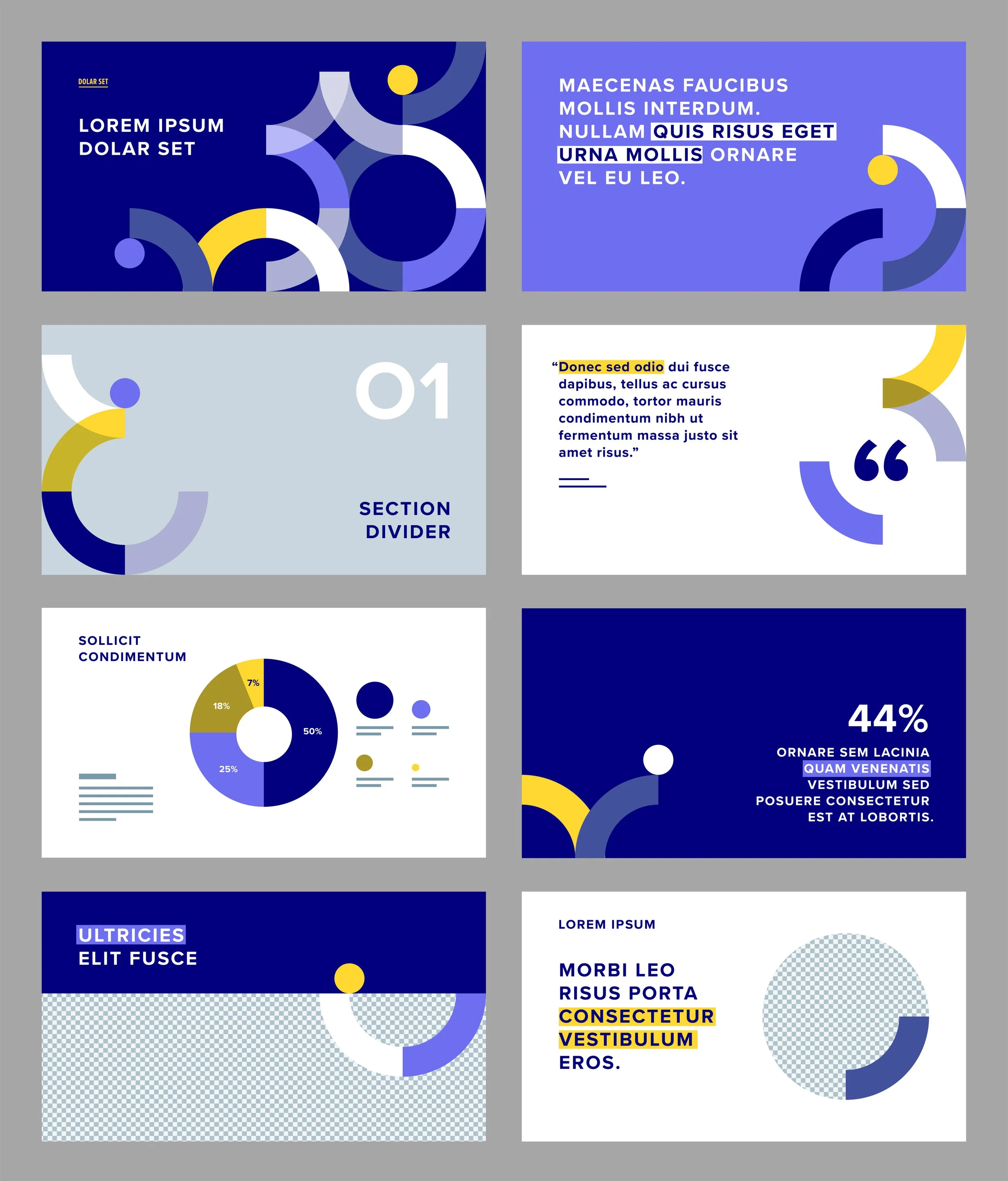
Learners expect most professional-facilitated instruction to include a supplementary slide deck, usually in PowerPoint.
Crafting a series of slides, however, is never easy. How much text is too much text? How do I ensure my visuals enhance rather than distract from my narrative? How do I format my reference list?
In this section, we detail the components of an instructional slide deck as well as identify best practices for ensuring success.
Components of a Slide Deck
-
Your name, professional title, organization, designations (e.g., CPCU, ARM, AINS), and date of presentation.
-
Presented immediately after your title slide — three or four key takeaways, framed as actionables, you want your students to be proficient with at the end of the session. Be sure you’re considering why your learners need to understand the information you’re sharing (i.e., context) as well as for what reason (i.e., purpose; e.g., to better serve clients, reduce litigation claims). See Building Learning Objectives for more information.
-
The meat of your presentation. Not only should all of your content be directly applicable to at least one of your learning objectives (no tangents!), your content needs to be delivered in a way that is most likely to get your learners to the actionables you set out for them. Four content-delivery strategies are covered in detail in Organizing Content.
-
Revisit the learning objectives you promised in your introduction. Learners should be able to affirm what they’ve learned, why they’ve learned it, and how they can apply it as practitioners.
-
Using APA format, identify the resources you used and referenced in your instruction. See APA References for support.

Slide Deck Best Practices
-
Blocks of text, distracting or extraneous visuals —you can end up competing with your deck for your learners’ attention. As noted by Harrington and Zakrajsek (2017), students struggle in these situations because they are trying process your verbal instruction and your slides simultaneously and “are propably not very successful at doing either” (pp. 70-71).
Instead, your slides should be simple and concise: a few words or phrases, a single image. Remember your deck is meant to compliment your instruction, not replace you as the conveyor of content.
-
Researchers have found that not only are learners able to process images faster and with more efficiency than text, but they’re more likely to retain and later recall information because of those images (Foos & Goolkasian, 2008; McBride & Dosher, 2002). The key for the instructor, then, is to ensure that the images illustrate or expand upon—not distract from—the verbal instruction being delivered concurrently.
Augmenting examples and case studies (see Teaching and Reflecting) with visual components (e.g., photos, charts, graphs) can be particularly effective in clarifying concepts and ensuring your content is relatable, relevant, and seen as meaningful outside of the learning session (Harrington & Zakrajsek, 2017)—all expectations of adult learners.
-
When used judiciously, bold, italics, and other visual signifiers like arrows can help your learners focus on what really matters (Harrington & Zakrajsek, 2017). As a general rule of thumb, content with the strongest connection to your learning objectives is probably most appropriate to emphasize in your deck. Some exceptions, like specific data points in a busy graph, may make sense to highlight as well.
References
Abbajay. M. (2020). Best practices for virtual presentations: Fifteen expert tips that work for everyone. Forbes. https://www.forbes.com/sites/maryabbajay/2020/04/20/best-practices-for-virtual-presentations-15-expert-tips-that-work-for-everyone/?sh=5ab8dea33d19
Armstrong, P. (2010). Bloom’s Taxonomy. Vanderbilt University Center for Teaching. https://cft.vanderbilt.edu/guides-sub-pages/blooms-taxonomy/
Couturier, A. (2021). Five wellness strategies to make training environments more productive. Training Industry. https://trainingindustry.com/articles/compliance/5-wellness-strategies-to-make-training-environments-more-productive/
Foos, P. W., & Goolkasian, P. (2008). Presentation format effects in a levels-of-processing task. Experimental Psychology, 55, 215-217. doi: 10.1080/0098620709336652
Harrington, C., & Zakrajsek, T. (2017). Dynamic lecturing: Research-based strategies to enhance lecture effectiveness. Stylus.
Hetler, A. (2023). Pros and cons of AI-generated content. TechTarget. https://www.techtarget.com/whatis/feature/Pros-and-cons-of-AI-generated-content
Landrum, S. (2016). Four ways to create an engaging presentation atmosphere. Training Industry. https://trainingindustry.com/articles/workforce-development/4-ways-to-create-an-engaging-presentation-atmosphere/
Level Access (2020). How to make virtual meetings accessible. https://www.levelaccess.com/blog/how-to-make-virtual-meetings-accessible/
McBride, D. M., & Dosher, B. A. (2002). A comparison of conscious and automatic memory processes for picture and word stimuli: A process dissociation analysis. Consciousness and Cognition, 11, 423-460. doi: 10.1016/s1053-8100(02)00007-7
Rawson, A. (2021). Creating psychological safety in a virtual environment. Training Industry. https://trainingindustry.com/articles/strategy-alignment-and-planning/creating-psychological-safety-in-a-virtual-environment/
Sanders, L. (2021). Psychological safety in the learning environment. Training Industry. https://trainingindustry.com/articles/diversity-equity-and-inclusion/psychological-safety-in-the-learning-environment/
Shibley, M. (2023). Maximizing engagement in digital blended training. Training Industry. https://trainingindustry.com/magazine/spring-2023/maximizing-engagement-in-digital-blended-training/